Pride of Toowoomba
C16 106 "Pride of Toowoomba""Project 106" - Restoration of Steam Loco No. 106
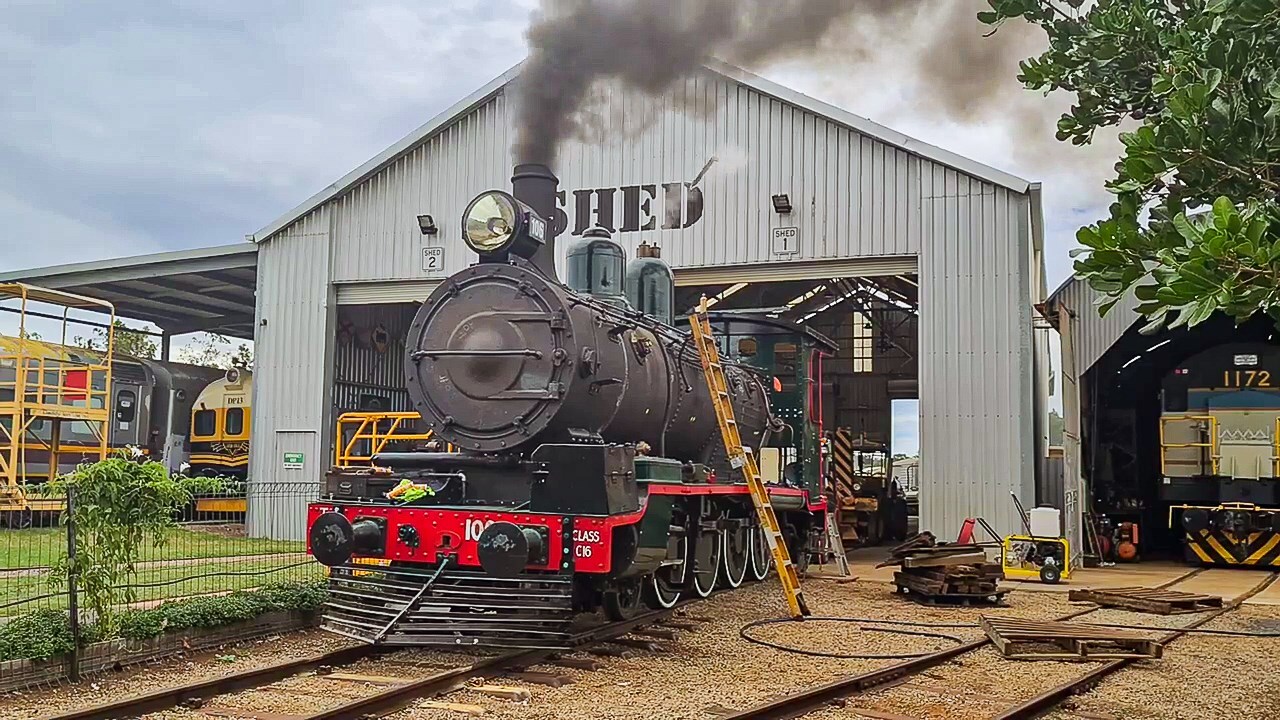
No. 106 was written off the books on 28th May 1964, having clocked up 1,134,533 miles (1.8 million km's)!
Now back in her home town and renamed the "Pride of Toowoomba". The team of talented volunteer's at DownsSteam have painstakingly restored No.106 to operational order.
The "Pride of Toowoomba"is once again imparting the pleasure of roaming the Darling Downs and the Granite Belt behind a majestic steam locomotive proudly built and restored in Toowoomba!
Major Sponsor - Clive Berghofer
No. 106 - Southern Cross Works Build 28
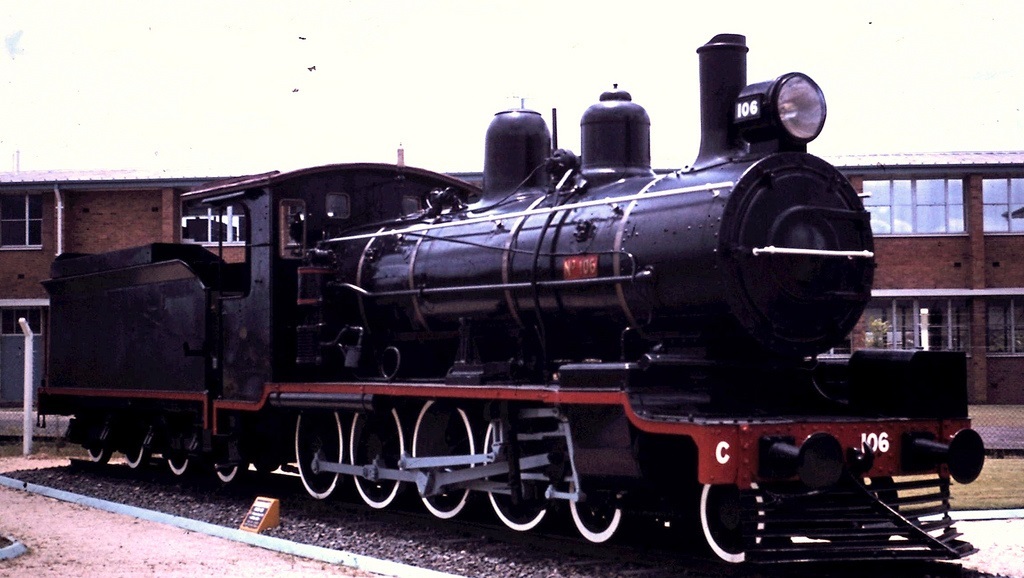
Only one locomotive, No. 106, survived the scrapers torch, saved for its originality and preserved in the Redbank Rail Museum. Built in 1914 by the Toowoomba Foundry Company, No. 106 holds a significant place in Toowoomba's railway heritage. In 1915, she assisted the official "Drayton Deviation" opening train, hauled by No. 694 Lady McGregor.
On 26 October 2001, No. 106 returned home to Toowoomba. She was first stored at Moore Trailers in Pittsworth before being moved to the newly developed Drayton site. Apart from a C17 cab, electric lighting, additional air reservoirs, and coal boards on the tender, she remains much as she was originally built.
Throughout her working life, No. 106 spent most of her time in the Southern Division, with at least five years based in Townsville, before finishing her career in Cairns.
C16 Class Background
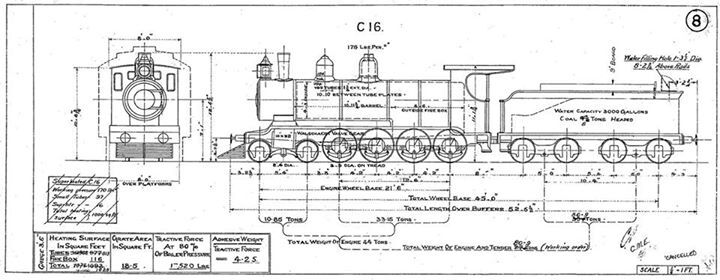
Designed in 1903 as an improved 4-8-0 loco for Queensland, the C16 class ultimately totalled 152 units.
While originally intended for hauling livestock and painted black, they were assigned various duties upon entering service. Notably, three locomotives No. 427 (brown), No. 428 (blue), No. 429 (green) were specially painted for use on the Sydney Mail run. Further developments of the basic design led to the introduction of the C17 "Brown Bombers" class in early 1920's.
The C class were built by several manufacturers:
Ipswich Railway Works (51)
Evans, Anderson, Phelan & Co (41)
Walkers Limited (45)
Toowoomba Foundry (15)
A Little Bit of History
The C16 class was one of Queensland Railways’ true workhorse steam engines, powerful 4-8-0 freight locomotives that kept the state moving through the first half of the 20th century.
Introduced in 1903, these narrow-gauge engines were designed for heavy goods trains on Queensland’s 3 ft 6 in (1067 mm) network. In QR’s system, “C16” means:
- C four coupled driving axles
16 16-inch diameter cylinders
A total of 152 C16 locomotives were built between 1903 and 1918, making them one of the most important freight classes of their era.
Design & Features
The C16 was a 4-8-0 tender locomotive (twelve wheels in total), built for strength and sure-footed traction on light, winding track. Key features included:
- Saturated steam boiler (no superheater in the original design)
- Walschaerts valve gear with slide valves simple and reliable
- Large open cab with cutaway sides to keep crews cooler in Queensland’s climate
- Low axle load, ideal for branch lines and older infrastructure
Locomotives were built by several Queensland firms, including:
- North Ipswich Railway Workshops
- Walkers Limited, Maryborough
- Evans, Anderson, Phelan & Co., Brisbane
Toowoomba Foundry
By 1917, the fleet had grown to 152 locomotives, working right across the state.
In Service Freight Workhorses
Although designed for heavy freight (including livestock trains), the C16s quickly proved to be good all-round mixed-traffic locomotives. Over their long careers they:
- Hauled freight trains and heavy yard shunts
- Worked country passenger and mail trains when required
- Even handled the BrisbaneSydney Mail at times before larger passenger engines took over
From the 1920s onward, newer classes such as the C17 gradually took over the mainline duties, and the C16s were pushed back to branch lines and shunting.
During World War II, several C16s were even loaned to the Commonwealth Railways to help move wartime traffic on other narrow-gauge systems a sign of how dependable they were.
In the 1940s and 50s many C16s were upgraded with:
- Improved smokeboxes and taller tapered chimneys for better steaming
- Updated sandboxes and fittings as QR standardised components
By the 1960s, diesel locomotives were rapidly replacing steam. The last C16 in regular service, No.38, worked on in Rockhampton until 1969, with the class officially ending its QR career by 1970 after almost 66 years in service.
Survival & Preservation
Of the original 152 locomotives, only one C16 survived the scrapper’s torch:
C16 No.106 now fully restored and operational at DownsSteam Tourist Railway & Museum in Toowoomba.
All other members of the class were progressively scrapped as steam was phased out, making No.106 an extremely significant survivor.
C16 No.106 “The Pride of Toowoomba”
C16 No.106 has a special place in Queensland’s railway story and in DownsSteam’s collection.
- Built: 1914 by the Toowoomba Foundry
- Entered service: 21 April 1915
- Duties: Heavy freight, mixed trains and shunting just like her sisters
- Uniqueness:
- The only surviving C16
- The last surviving steam locomotive built by Toowoomba Foundry
Unlike most of the class, No.106 never received the later smokebox and chimney modifications, so her appearance today is very close to her early working days.
After withdrawal in the early 1960s, she was kept by Queensland Rail at Redbank as a training and display engine unintentionally saving her from scrapping.
In 2001, No.106 was acquired by DownsSteam, and moved back to the Darling Downs. What followed was a 20-year volunteer restoration project:
- The locomotive arrived effectively as a dismantled kit of parts
- Volunteers painstakingly rebuilt the engine using original drawings and heritage support
- Significant fundraising and community support helped see the project through
In October 2021, C16 No.106 steamed under her own power for the first time in almost 60 years. She was officially named “The Pride of Toowoomba” in honour of:
- Her place of manufacture
- Her restoration in the region
- The community effort that brought her back to life
Today, No.106:
- Runs special excursion trains for DownsSteam
- Represents 152 C16 locomotives and an entire era of Queensland freight steam
Stands as a working tribute to Queensland’s local engineering and the passion of preservation volunteers
At a Glance C16 Class Facts
- Wheel arrangement: 4-8-0
- Gauge: 3 ft 6 in (1067 mm)
- Cylinders: 16 in × 22 in, 2 outside
- Valve gear: Walschaerts with slide valves
- Boiler pressure: 175 psi (saturated steam)
- Tractive effort: ~17,500 lbf
- Built: 19031918
- Total built: 152
Preserved: Only No.106, operational at DownsSteam
C16 No.106 is more than just a locomotive; she is the last of her kind, a link to Queensland’s early 1900s railway expansion, and a moving monument to the skills of Toowoomba’s engineers and today’s volunteers. Visitors to DownsSteam can see, hear and feel what heavy steam freight power was really like on Queensland’s narrow-gauge lines.